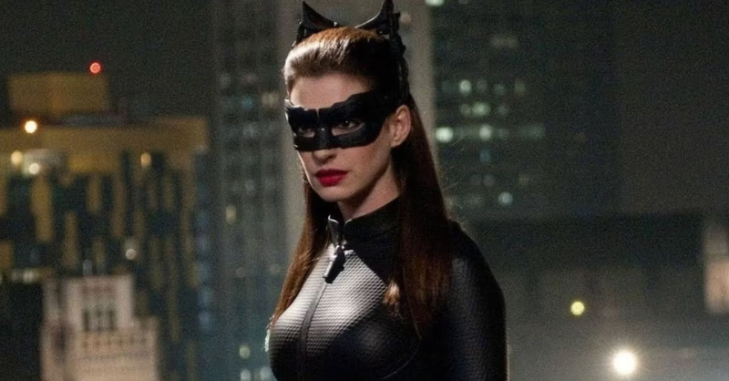
Anne Hathaway Catwoman arrived in The Dark Knight Rises as Christopher Nolan’s grounded version of Selina Kyle. She played a skilled thief rather than a traditional supervillain. Her performance mixed humor, danger, self-interest, and unexpected loyalty.
That approach helped the character fit Nolan’s realistic Gotham without losing her comic-book identity. Selina still manipulates people, steals valuables, and changes alliances when circumstances demand it. Yet the film gives every familiar Catwoman element a practical reason.
Hathaway plays Selina Kyle as a clever Gotham thief whose loyalties remain difficult to predict. Nolan grounds the character through practical clothing, criminal skills, and social awareness. The result is a Catwoman who feels recognizable without copying earlier screen versions, including Michelle Pfeiffer’s celebrated interpretation.
| Key fact | Details |
|---|---|
| Movie | *The Dark Knight Rises* |
| Release year | 2012 |
| Character | Selina Kyle |
| Director | Christopher Nolan |
| Batman actor | Christian Bale |
| Main antagonist | Bane, played by Tom Hardy |
| Character style | Cat burglar, grifter, antihero |
| Costume designer | Lindy Hemming |
Why Anne Hathaway Catwoman Still Works So Well
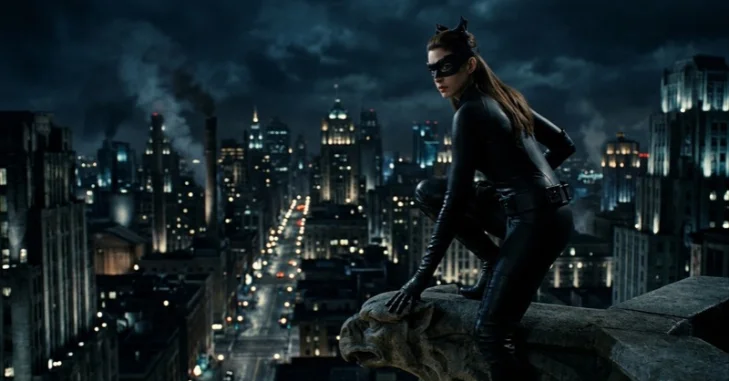
Nolan approached Selina as a believable criminal before treating her as a comic-book icon. He described her as a con woman and grifter who could exist inside his Gotham. That decision shaped both the writing and the performance.
Selina first appears capable of switching personalities whenever a situation changes. She can seem frightened, charming, sarcastic, or threatening within the same encounter. Those rapid changes become part of her survival strategy rather than a supernatural transformation.
That quality separates her from Bruce Wayne while also connecting the two characters. Both hide important parts of themselves and use carefully built public identities. Their scenes work because neither character completely trusts the other.
Newspaj readers interested in other performers with signature roles can also explore its Kimberly J. Brown career profile. Brown’s association with Halloweentown offers another example of an actor becoming strongly linked with one character. Her wider career also shows why a famous role rarely tells the full story.
She Thought She Was Preparing for Harley Quinn
The casting story became especially interesting again during 2026. Hathaway revealed that she initially believed Nolan wanted her to play Harley Quinn. She spent days preparing a completely different energy before learning the actual role.
Her assumption partly came from Michelle Pfeiffer’s famous performance in Batman Returns. She believed another filmmaker might avoid revisiting that character so soon. Nolan eventually told her the role was Selina Kyle during their meeting.
The misunderstanding also highlights something useful about her eventual performance. Selina succeeds because she can change her presentation within seconds. Hathaway had to make a similar adjustment during the meeting itself.
She later explained that she wanted her interpretation to belong specifically inside Nolan’s Gotham. She did not try to recreate Pfeiffer’s version from Tim Burton’s world. That choice gave the performance its own rhythm and identity.
The Catwoman Costume Was Designed Around Function
The costume remains one of the film’s most recognizable designs. Costume designer Lindy Hemming created a streamlined black outfit with practical details. The suit was actually built as two pieces joined visually by a low utility belt.
Its outer material used polyurethane-coated spandex with an embossed hexagonal pattern. The design avoided the shinier appearance associated with some earlier versions. That restrained surface suited Nolan’s darker and more realistic visual style.
The goggles provide the costume’s smartest visual idea. They work as useful equipment when positioned over Selina’s eyes. When raised, their shape creates the familiar silhouette of cat ears.
Her high-heeled boots also received a functional explanation within the costume design. Hemming said the serrated heels could work as weapons. The outfit therefore references classic Catwoman imagery without adding purposeless decorative features.
Training Made Selina’s Physical Confidence Believable
The role required more physical preparation than many of Hathaway’s earlier projects. Contemporary reporting described regular exercise, stunt work, and dance training during production. The goal was strength and movement rather than appearance alone.
Movement mattered because Selina rarely appears uncertain about her physical space. She fights, steals, escapes, rides the Batpod, and moves through wealthy social settings. Her confidence needs to look natural across all those situations.
Hathaway also worked on the character’s walk with a movement coach. She explained that finding the right movement helped other parts of Selina fall into place. That physical detail supported the character without turning her behavior into a parody.
Readers exploring screen careers can compare that transformation with Afton Williamson’s movies and television work. Williamson’s career includes crime, drama, and action-oriented television roles. That profile provides more entertainment coverage focused on performance and character work.
Selina Kyle Is More Than Batman’s Love Interest
Selina’s relationship with Bruce matters, but her story does not begin with romance. She enters the film with her own goals and serious personal problems. Her main concern is escaping the consequences attached to her criminal identity.
That motivation explains why her loyalties change throughout the story. She helps people when their interests overlap with hers. She also makes selfish choices when survival appears more important.
Her arc gradually pushes her toward a decision about what kind of person she wants to become. She can leave Gotham when escape becomes possible. Instead, she returns during the final conflict and helps Batman.
That decision works because the film spends time showing her distrust of wealthy Gotham society. She sees inequality from a criminal’s viewpoint rather than Bruce’s privileged position. Their eventual partnership therefore requires both characters to reconsider earlier assumptions.
How This Catwoman Differs From Earlier Movie Versions
Michelle Pfeiffer’s Selina in Batman Returns operates inside Tim Burton’s heightened, gothic world. Her transformation is theatrical and closely connected with that film’s expressionist style. Nolan’s version uses crime, class tension, technology, and deception instead.
Halle Berry’s 2004 Catwoman also followed a separate character and mythology. The Nolan film returns to Selina Kyle and places her directly inside Batman’s existing Gotham story. That creates a stronger connection with the character’s traditional identity.
The difference does not make one interpretation automatically superior. Each version reflects the director, period, and story surrounding it. Hathaway’s strength comes from fitting the rules already established by Nolan’s trilogy.
For another look at an actor strongly associated with an action franchise, see Newspaj’s Paul Walker movie retrospective. That article examines how one defining role can shape a performer’s public legacy. It also covers work beyond the franchise audiences remember most.
Why the Performance Remains Memorable
The performance works because Selina never feels like a smaller copy of Batman. She possesses her own humor, methods, motives, and moral limits. Her scenes bring a lighter energy without breaking the film’s serious tone.
She also gives Bruce a different kind of challenge than Bane. Bane attacks his body, resources, and belief in control. Selina tests his judgment about people and the social order surrounding him.
The costume, movement, dialogue, and shifting loyalties all support the same central idea. This Selina survives by reading people faster than they read her. That consistency helps explain why the interpretation still receives attention years later.
The renewed 2026 discussion around her unusual audition has also returned attention to the role. It adds fresh context without changing what viewers already see on screen. Her rapid adjustment during casting now feels especially appropriate for such an adaptable character.
Frequently Asked Questions
Was Anne Hathaway Catwoman in The Dark Knight Rises?
Yes, she played Selina Kyle in Christopher Nolan’s 2012 film The Dark Knight Rises. Warner Bros. announced her casting in January 2011. The movie became the final installment of Nolan’s Batman trilogy.
Did the movie ever call her Catwoman?
The film focuses primarily on the name Selina Kyle. Warner Bros.’ original casting announcement also emphasized her civilian identity. That approach matches Nolan’s preference for grounding comic-book identities within the story.
Did she think she was auditioning for Harley Quinn?
Yes, she has said she expected the female role might be Harley Quinn. She prepared for that possibility before Nolan revealed Selina Kyle. She revisited the story publicly during interviews in 2026.
Why do her goggles look like cat ears?
The design gives the iconic shape a practical explanation. The goggles sit over her eyes when used as equipment. When flipped upward, they create the recognizable cat-ear silhouette.
Could she return as Catwoman?
No confirmed continuation of this version has been announced. Nolan’s Batman trilogy concluded with The Dark Knight Rises. Hathaway has since reunited professionally with Nolan on other films, including The Odyssey.
The Lasting Place of Selina Kyle in Nolan’s Gotham
This version of Selina succeeds because every familiar Catwoman trait fits the trilogy’s established rules. Her disguise, equipment, movement, criminal background, and moral uncertainty all serve clear purposes. Nothing requires Gotham to become a different kind of world.
Her story also provides a useful counterpoint to Bruce Wayne’s final journey. Both characters spend much of the movie trapped by identities built around survival. By the ending, each finds a possible life beyond the role Gotham expects.
That balance keeps the performance interesting long after the original release. Watch The Dark Knight Rises again and focus on how quickly Selina changes tactics between scenes. Those small choices explain much of the character’s lasting appeal.