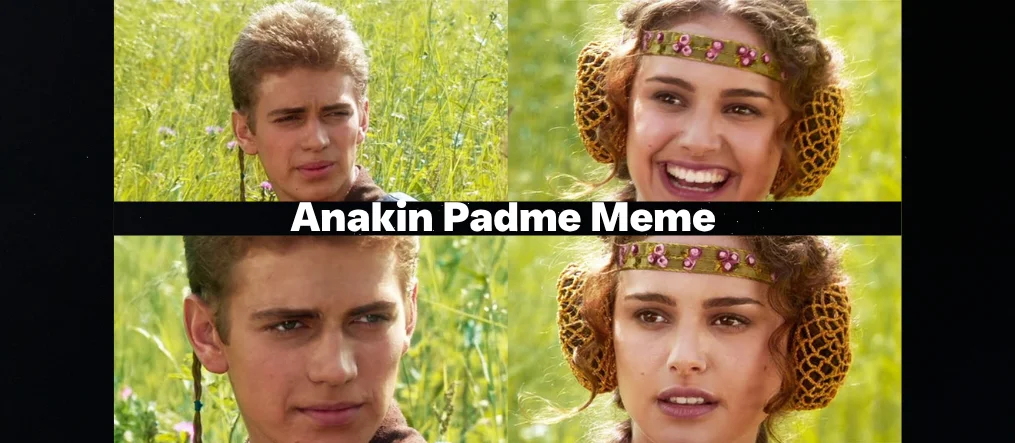
The Anakin Padme meme turns one tense Star Wars conversation into a simple joke about misplaced optimism. Its four panels show confidence, reassurance, silence, and sudden concern. That sequence makes the format useful far beyond Star Wars fandom.
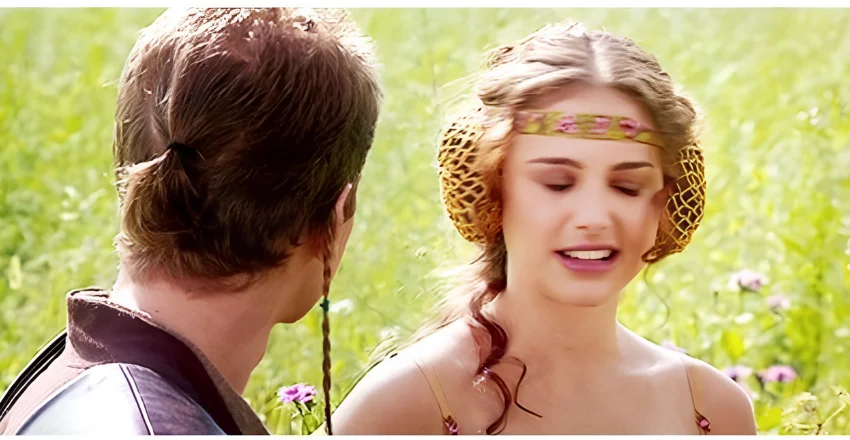
The images come from Star Wars: Episode II, Attack of the Clones, released in 2002. They show Anakin Skywalker and Padmé Amidala talking together in a meadow on Naboo. The familiar meme captions were created later and are not dialogue from the movie.
The four-panel format shows someone making a questionable statement, followed by another person seeking reassurance. Silence replaces the expected answer. The final panel shows growing concern, creating the joke through an uncomfortable realization rather than a traditional punchline.
| Key fact | Details |
|---|---|
| Common name | “For the Better, Right?” |
| Source | Star Wars: Episode II, Attack of the Clones |
| Film release | 2002 |
| Meme format | Four-panel reaction image |
| Viral period | 2021 |
| Main joke | Optimism turning into concern |
| Common uses | Broken promises, red flags, misleading claims, unexpected consequences |
Key takeaways
* The screenshots come from a 2002 Star Wars film. * The famous meme dialogue was invented online. * The format became widely visible during 2021. * Padmé’s changing expression carries much of the joke. * The template works because viewers understand its emotional sequence immediately. * It remains useful for jokes about expectations meeting uncomfortable reality.
What does the Anakin Padme meme mean?
The Anakin Padme meme usually represents a hopeful assumption that quickly starts looking unsafe or incorrect. One speaker introduces an idea that initially sounds acceptable. The second speaker then realizes the unstated consequences may be worse than expected.
Its humor depends heavily on timing rather than complicated wording. Padmé begins with a smile and expects a reassuring answer. Anakin’s silence changes that confidence into visible concern.
This structure suits jokes about technology, work, relationships, entertainment, and everyday decisions. A harmless statement can become suspicious after one unanswered question. That flexibility helped the image spread beyond dedicated Star Wars communities.
Where did the four-panel image come from?
The screenshots come from the meadow scene in Attack of the Clones. Anakin and Padmé discuss government, political leadership, and how decisions should be made. Padmé becomes uncomfortable as Anakin expresses increasingly troubling ideas.
The meme does not reproduce their actual conversation word for word. Instead, internet users rearranged still images and added fictional dialogue. Fanlore also notes that the now-famous exchange originated with the meme itself.
That distinction matters because the invented captions feel believable within the original scene. Anakin’s facial expressions already suggest certainty and unease. Padmé’s changing reactions provide the visual setup needed for the joke.
How the “For the Better, Right?” joke works
The first panel normally gives Anakin a statement with hidden consequences. The second panel shows Padmé interpreting that statement in the most reasonable way. Her hopeful reaction invites the viewer to expect reassurance.
The third panel changes everything without requiring another sentence. Anakin simply looks back without confirming her assumption. His silence becomes the answer.
The fourth panel repeats Padmé’s concern with a less confident expression. That repetition creates the recognizable “right?” rhythm associated with the template. Meme creators can replace the subject while preserving the same emotional progression.
A common structure looks like this:
1. Panel one: Someone announces a plan, promise, rule, or change. 2. Panel two: Another person assumes the outcome will be reasonable. 3. Panel three: The first person offers no reassurance. 4. Panel four: The second person realizes something may be wrong.
Why did the format become popular?
The format reportedly appeared online in 2021 and quickly circulated through Twitter and Reddit communities. One documented early version came from the Star Wars posting account associated with the format. Reddit helped expose the template to a much broader meme audience.
Its biggest advantage is readability. Viewers do not need detailed Star Wars knowledge to understand Padmé’s expression changing from cheerful to worried. The visual sequence communicates uncertainty before someone even finishes reading the captions.
The four panels also provide more room than a single reaction image. Creators can establish a premise, create an expectation, insert silence, and deliver a reaction. That makes the template useful for longer jokes without becoming difficult to follow.
American social media users also encounter the format across many unrelated subjects. It can describe subscription changes, workplace announcements, software updates, school rules, or questionable promises. The Star Wars setting becomes secondary once the joke begins.
The dialogue was never spoken in the movie
One common misconception concerns the famous “For the better, right?” exchange. Those specific captions do not appear as spoken dialogue in the original film. They were created for the online meme format.
The confusion is understandable because the invented exchange matches the scene’s mood. Anakin discusses ideas that make Padmé increasingly uneasy. The screenshots therefore feel naturally connected to the later captions.
That connection is part of the template’s strength. The expressions seem perfectly matched to the rewritten conversation. Viewers can understand the joke without knowing which words came from the screenplay.
Why Padmé’s reaction makes the meme memorable
Many reaction memes depend on one exaggerated facial expression. This one works differently because the expression changes between panels. Padmé moves from amusement toward uncertainty.
That shift gives the reader a miniature story. The first reaction says the situation seems normal. The final reaction says the original assumption may have been dangerously optimistic.
Natalie Portman’s expressions also remain readable when captions change completely. The viewer can recognize surprise or concern without extra explanation. That makes the image unusually adaptable for repeated online use.
Readers interested in screen personalities can also browse Newspaj’s feature on Liza Minnelli’s entertainment career and wellness journey. The site also covers performers across different eras. That broader entertainment focus makes pop-culture explainers a natural fit for Newspaj.
How people use the template today
Most versions keep the original four-panel arrangement while changing the text. Creators often make the first statement sound positive or neutral. The hidden drawback then becomes obvious through Padmé’s questions.
Workplace jokes are especially easy to build with this structure. A company might announce a new policy before employees ask whether it benefits them. The silent third panel then supplies the punchline.
Technology jokes work equally well. Someone might promise a free update before another person asks about subscriptions or removed features. The final worried reaction communicates the expected disappointment.
Entertainment references can also remix the format with other movies, television shows, or fandom debates. Newspaj covers television performers in features such as Afton Williamson’s movies and TV roles. It also explores older Hollywood history through articles like Myrtle Gonzalez’s film career.
What makes a good version of the meme?
A strong version should make the second panel’s assumption sound reasonable. The audience needs to understand why Padmé expects a reassuring answer. If the concern feels obvious immediately, the later reaction loses impact.
The opening statement should also contain enough ambiguity for two interpretations. One interpretation seems harmless. The other provides the uncomfortable reveal.
Short captions usually work better because the facial expressions provide much of the storytelling. Long explanations slow down the four-panel rhythm. The strongest versions let the third panel’s silence do most of the work.
Creators should also avoid forcing topics that require extensive background knowledge. The joke becomes weaker if readers need several paragraphs of context. Familiar situations usually produce clearer results.
Why the meme still works years later
Internet formats often disappear once their original trend ends. This template has lasted because its structure represents a recurring human experience. People frequently hear promises that sound reassuring until they ask one more question.
Its meaning also survives changes in platforms and online communities. The joke does not depend on one website feature, celebrity moment, or temporary slang term. The underlying pattern remains understandable.
Star Wars recognition gives the image another advantage. Even viewers unfamiliar with this specific scene may recognize the characters. That familiarity helps new variations feel accessible.
The reusable format also fits how social media communicates ideas quickly. Four images can show optimism, doubt, silence, and realization within seconds. Few words are necessary when the expressions already explain the emotional turn.
Frequently asked questions
Why is the Anakin Padme meme called “For the Better, Right?”
The name comes from the best-known caption associated with the four-panel template. Padmé asks whether Anakin’s proposed change will be “for the better.” His lack of reassurance creates the joke.
The wording became closely associated with the image after the template spread online. People now recognize the phrase without needing the original caption. It functions almost like an alternate name for the format.
What movie is the meme from?
The screenshots come from Star Wars: Episode II, Attack of the Clones. The film was released in 2002. The scene takes place while Anakin and Padmé spend time together on Naboo.
The movie scene predates the viral meme by many years. Internet users later selected the expressions and arranged them into the familiar layout. The finished template therefore combines film imagery with completely new captions.
Did Anakin really say the famous meme lines?
No, the familiar captioned conversation was not spoken that way in the film. The dialogue was written by meme creators. The original scene contains a different political discussion.
The invented wording still fits the characters’ expressions surprisingly well. That visual match helped create confusion about the quote’s origin. It also contributed to the format’s popularity.
When did the meme become popular?
The recognizable four-panel version spread widely during 2021. Early documented examples circulated through Twitter and Reddit. Later versions appeared across many other social platforms.
The format eventually became an evergreen reaction image. People continue adapting it for new subjects. Meme-generator websites still provide blank versions and editable templates.
The lasting appeal of “For the Better, Right?”
The joke succeeds because it captures the moment when confidence becomes suspicion. Its message remains understandable even after thousands of variations. Star Wars provides the recognizable faces, but ordinary human uncertainty provides the humor.
New situations continually give creators reasons to reuse that pattern. A promise sounds good, someone asks an obvious question, and silence changes everything. That simple sequence keeps the four-panel reaction format useful long after its first viral wave.
For more entertainment coverage, readers can explore Newspaj’s feature on Sandra Bernhard’s career in entertainment. Newspaj also publishes explainers covering movies, performers, trends, and broader popular culture. Those related topics can help readers continue exploring familiar entertainment stories.