

Car repossession loopholes are not secret tricks that erase a loan. The real protections are legal rights that may delay, reverse, or provide grounds to challenge a repossession. They can matter when a lender makes an error, a repossession agent breaches the peace, sale rules aren’t followed, or state or federal law provides another remedy.
Repossession rules depend heavily on your state, loan contract, and individual circumstances. In many states, a lender can take a vehicle after default without giving advance notice. However, that does not mean lenders and repossession companies can ignore the law.
| Issue | What borrowers should know | Possible next step |
| Missed payment | Default terms usually come from your contract | Check the contract and payment history |
| Wrongful repossession | Payment or servicing errors can make a repossession disputable | Save statements and contact the servicer |
| Breach of peace | Self-help repossession must occur without a breach of peace | Document threats, force, or entry into a locked area |
| Sale notice | Notice before disposition is generally required under UCC rules, subject to exceptions | Review every post-repossession letter |
| Reinstatement | Some states or contracts allow you to cure the default | Ask for the reinstatement amount in writing |
| Redemption | You may be able to pay the secured obligation and permitted expenses before disposition | Request a redemption quote promptly |
| Vehicle sale | The disposition must be commercially reasonable | Keep sale and deficiency records |
| Special protection | Bankruptcy or military status may change the process | Get qualified legal advice quickly |
TL;DR
- There is no universal loophole that allows a borrower to stop making payments and keep a financed car indefinitely.
- A repossession may be challengeable if you were not in default or the servicer ignored a valid payment arrangement.
- Repossession agents generally cannot use force, threats, or other conduct that amounts to a breach of peace.
- Reinstatement and redemption can provide legitimate avenues for recovering a vehicle.
- Sale notices, sale procedures, deficiencies, and surplus funds can create additional rights.
- Bankruptcy and the Servicemembers Civil Relief Act can provide protection in qualifying cases.
- Hiding a vehicle is not a reliable legal strategy and can make a difficult situation worse.
Which Car Repossession Loopholes Are Real?
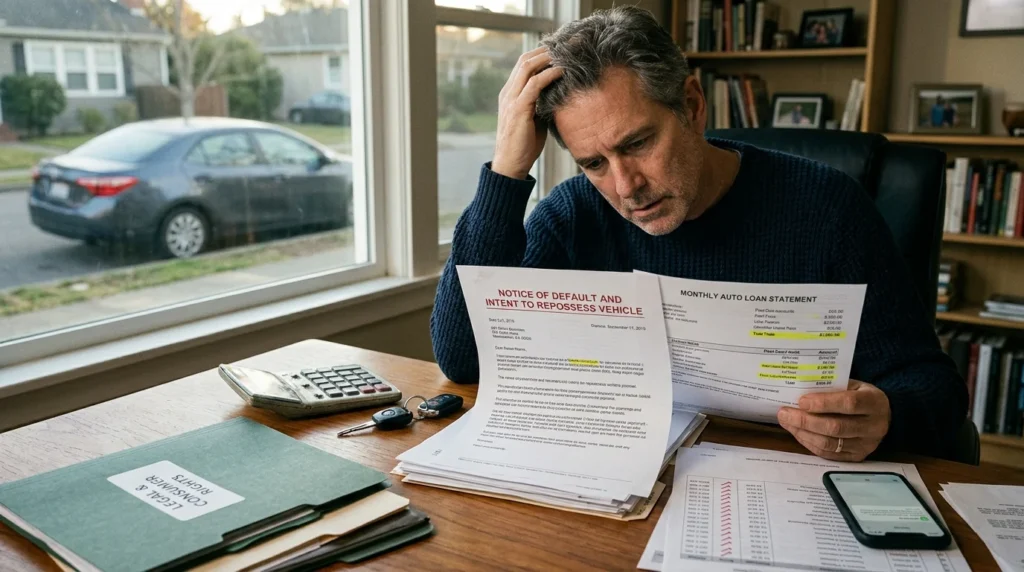
The useful “loopholes” are better understood as rights, defenses, and procedural protections. They do not cancel a valid debt. Instead, they can matter when a creditor has not met the legal requirements to take or sell the vehicle.
Here are eight protections worth checking.
1. The lender may have repossessed the vehicle because of an account error
Start with the simplest question: Were you actually in default?
Payment-posting errors, ignored agreements, or servicing mistakes can lead to wrongful repossessions. In some cases, consumers have had vehicles repossessed despite making timely payments or complying with qualifying payment arrangements.
Gather:
- Bank statements and payment confirmations
- Emails, letters, and text messages from the lender
- Copies of any deferment or modification agreement
- Screenshots from your online account
- The retail installment contract or lease
Contact the lender or servicer immediately if its account records do not match your payment history. If you believe the repossession resulted from an error, keep detailed records of every conversation and document related to the account.
2. A repossession agent cannot breach the peace
A creditor’s ability to take a vehicle without a court order has limits.
A secured creditor may generally take collateral after default through a judicial process or, in some circumstances, without court involvement. However, a nonjudicial repossession must occur without a breach of the peace.
The exact definition varies by state. Examples may include using physical force, threatening force, or removing a vehicle from a closed garage without permission.
Do not start a physical confrontation with a repossession agent. If you believe the agent acted unlawfully, document what happened from a safe location and preserve any available evidence.
3. Post-repossession sale notice rules can matter
A common misconception is that every borrower must receive a warning before the vehicle is first taken. That is not universally true.
In many states, repossession can occur after default without advance notice. Different rules may apply when the lender plans to sell or otherwise dispose of the vehicle. Borrowers generally have certain notification rights before disposition, although exceptions may apply.
Read post-repossession notices closely. Check the planned sale date, deadlines, redemption information, and contact details.
4. Reinstatement may allow you to cure the default
Reinstatement usually means bringing the account current rather than paying the entire remaining loan balance.
The availability of reinstatement and its exact requirements depend on state law and your agreement. Some borrowers may be allowed to cure the default and reinstate the loan after repossession.
Ask the lender for a written reinstatement quote. Confirm the deadline, past-due payments, authorized fees, and what will happen after payment.
Time matters because the lender may already be preparing the vehicle for sale.
5. Redemption can provide another route to recovering the vehicle

Redemption is different from reinstatement. Redemption generally allows a debtor to recover collateral by satisfying the secured obligation and paying permitted expenses before certain deadlines or events occur.
That amount can be much higher than the past-due balance. Still, it is an important right to understand if you can obtain the required funds. Ask for the payoff and redemption amounts in writing. Do not assume the reinstatement amount and the redemption amount are the same.
6. The lender’s sale must be commercially reasonable
Repossession does not end the financial questions surrounding the loan. The method, timing, location, terms, and other aspects of a vehicle’s sale generally must meet applicable commercial-reasonableness standards.
The sale proceeds help determine what happens next. If the vehicle sells for less than the amount you owe plus permitted expenses, you may face a deficiency balance. If the vehicle sells for more than the amount properly owed, you may be entitled to the surplus, depending on the applicable rules.
Keep:
- Sale notices
- Auction or sale information
- The final sale price
- Repossession and storage charges
- The lender’s deficiency calculation
If you are still able to sell or refinance the vehicle before a lawful repossession occurs, understanding its market value can help you evaluate your options. Newspaj’s Automobile section provides general model information and vehicle guides. Current payoff amounts and market valuations should still come from your lender and current valuation sources.
7. Bankruptcy can temporarily change collection activity
Bankruptcy is a legal process, not a casual tactic for delaying repossession. Filing a bankruptcy case generally triggers an automatic stay, which stops many collection activities. A creditor that wants to continue certain repossession efforts may need to seek permission from the bankruptcy court.
Timing and vehicle-ownership rights can become complicated if the car was already taken before the bankruptcy filing. Do not assume that bankruptcy automatically requires a lender to return a previously repossessed vehicle. If you are considering bankruptcy, speak with a qualified bankruptcy attorney before making decisions based solely on the vehicle.
8. Servicemembers may have additional federal protections
Qualifying active-duty servicemembers may have special rights under the Servicemembers Civil Relief Act (SCRA).
When the statutory requirements apply, a creditor may need to obtain a court order before repossessing a vehicle based on a breach of certain pre-service contracts. Eligibility depends on factors such as when the vehicle was purchased or leased and when payments were made.
These protections do not erase the loan or prevent all collection activity. Instead, they can change what the creditor must do before repossessing the vehicle.
Risky “Loopholes” That Can Backfire
Internet discussions sometimes suggest hiding the vehicle, constantly moving it, changing identifying details, or preventing lawful access as permanent solutions.
Those actions do not fix the default or eliminate the creditor’s security interest. A lender may pursue other lawful remedies when peaceful self-help repossession is not possible.
Likewise, there is no nationwide rule requiring a lender to wait 30, 60, or 90 days after a missed payment. In many states, repossession rights may arise as soon as a borrower defaults under the contract.
Another myth is that voluntarily surrendering the car automatically wipes out the remaining balance. A voluntary surrender may reduce certain repossession costs, but the borrower can still face a deficiency after the vehicle is sold.
What to Do if Repossession Is Getting Close
Contact the lender before the vehicle is taken. Ask whether it offers a deferment, revised payment schedule, hardship plan, or another written arrangement.
If the lender agrees to change the payment terms, get the agreement in writing.
Next, compare the vehicle’s current value with the loan payoff amount. For general background on individual models, Newspaj has resources such as its 2021 Nissan Versa guide. Use current market offers rather than older MSRP figures when making a financial decision.
If your vehicle belongs to a different class, model pages such as Newspaj’s 2020 Hyundai Kona overview can provide specifications and general ownership context. A current appraisal is still necessary when making a present-day sale decision.
Most importantly, preserve every document. A payment receipt or written hardship agreement can become far more useful than a supposed internet trick.
What to Do After the Car Has Been Taken
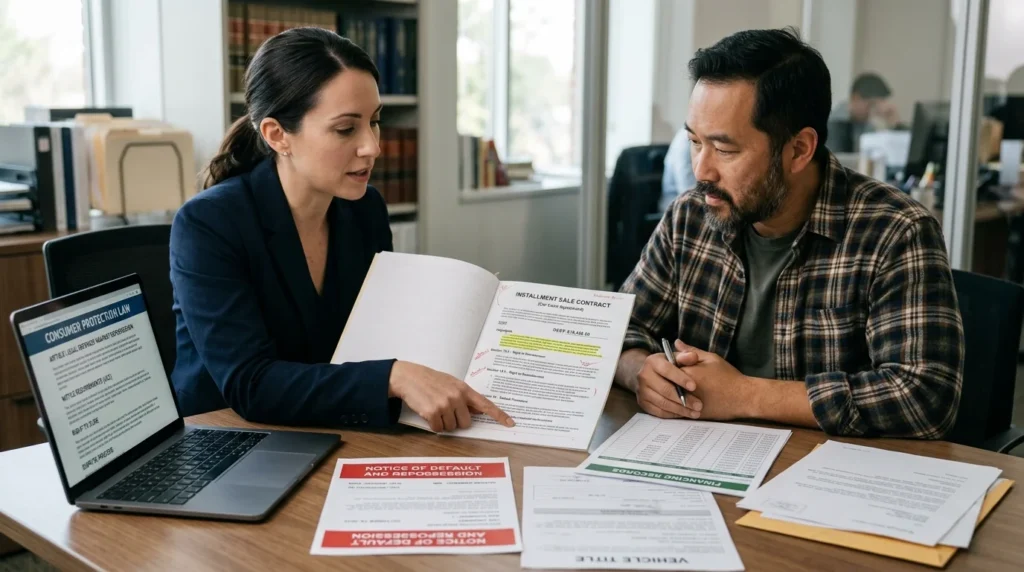
Act quickly, as post-repossession deadlines can be tight. Request a written explanation from the lender showing what you owe and what options remain. Ask about reinstatement, redemption, personal belongings, the intended sale, and any applicable fees.
Check the notice against your contract and state law. If you believe the seizure involved a payment error, threats, force, unlawful entry, or another procedural problem, preserve the evidence and consider speaking with a consumer-law attorney or local legal-aid organization.
After the sale, examine the deficiency statement rather than assuming the figure is correct. The sale price, authorized expenses, payments credited to the account, and applicable state rules can all affect the final amount.
The Safest Way to Use Your Rights
A genuine legal protection is more useful than a clever-sounding trick. Check your contract, payment history, repossession notices, and state rules. Get any agreement with the lender in writing. If the vehicle has already been taken, ask about reinstatement and redemption immediately.
If you suspect an unlawful seizure or need to consider bankruptcy, SCRA protections, or a deficiency dispute, contact a qualified attorney or legal-aid service in your state. The sooner you verify your rights, the more options you may still have.
This article provides general U.S. consumer information and is not legal advice. Vehicle repossession laws and available remedies vary by state and individual circumstances.
Frequently Asked Questions
No universal rule allows a borrower to stop making payments indefinitely while keeping a lender’s collateral. Real protections involve default status, lawful repossession procedures, reinstatement, redemption, sale requirements, bankruptcy, and special federal rights.
Potentially. In many states, a lender may have repossession rights as soon as a borrower defaults. Your contract defines what constitutes default, while state law may provide additional protections.
State rules differ, but removing a vehicle from a closed garage without permission may constitute a breach of the peace in some jurisdictions.
Possibly. Depending on state law and the contract, reinstatement may allow you to cure the arrears and eligible charges. Redemption generally requires you to satisfy the secured obligation and permitted expenses before the applicable deadline.
You may. If the sale proceeds and applicable credits do not cover the debt and authorized costs, a deficiency can remain. If the proceeds exceed the amount properly owed, surplus rules may require the remaining money to be paid to the debtor.