
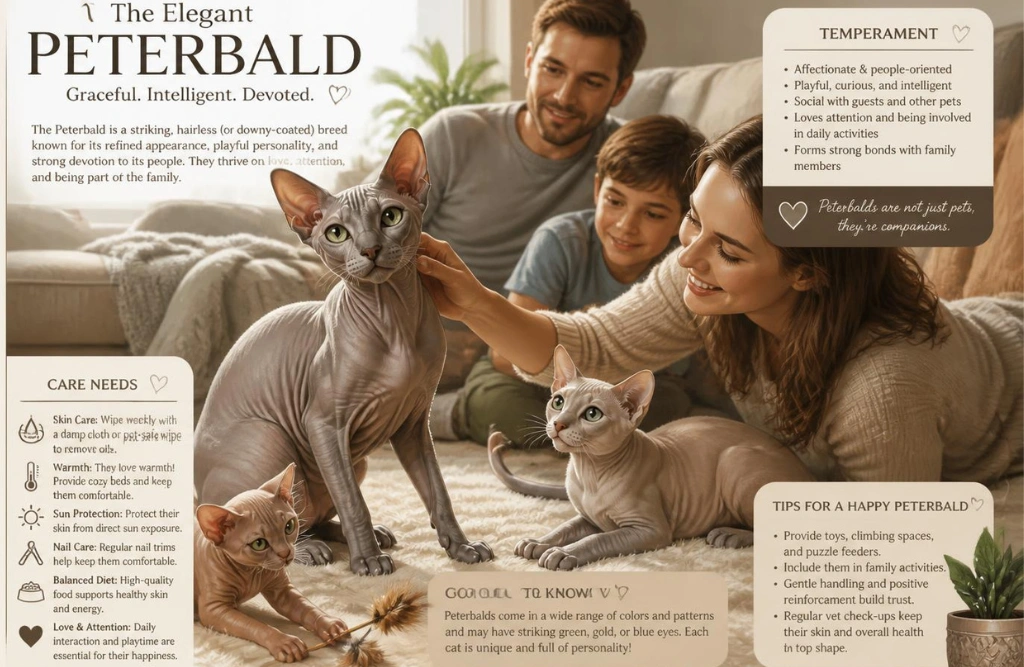
The Peterbald is a rare Russian cat breed known for a slender body, oversized ears, and unusually varied coats. Some are nearly hairless, while others have velvety, wiry, or straight fur. For U.S. owners, the bigger question is whether this highly social breed fits their home and care routine.
Quick answer: These cats are affectionate, active, intelligent companions that usually want frequent contact with people. Their coat can range from bald to fully coated, and some coats change during early life. Hairless individuals need thoughtful skin and temperature care, while every cat still needs routine veterinary, dental, and preventive care.
| Key fact | What to know |
| Origin | St. Petersburg, Russia, in the 1990s |
| Typical size | Medium; TICA lists females at 5–7 pounds and males at 7–10 pounds |
| Life expectancy | TICA lists 12–15+ years |
| Coat | Ranges from hairless to flock, velour, brush, or straight coat |
| Temperament | Social, playful, curious, intelligent, and often vocal |
| Allergy note | Hairless cats are not automatically hypoallergenic |
| Care focus | Skin, ears, nails, teeth, temperature comfort, play, and companionship |
TICA currently lists the breed as medium-sized, with females around 5–7 pounds and males around 7–10 pounds. Its breed profile gives a life expectancy of 12–15 years or longer. Coat textures can range from completely hairless to a normal-looking coat.
Key takeaways
- Coats can range from hairless to fully coated and may change during early life.
- These cats usually want frequent social contact, play, and mental stimulation.
- Hairless individuals need extra skin care, sun exposure, and temperature management.
- Hairlessness does not guarantee a cat will be safe for someone with allergies.
What makes this Russian cat breed different?
Peterbald registries trace the modern breed to St. Petersburg, Russia, in 1994. It came from an experimental cross between a Donskoy and an Oriental Shorthair. TICA accepted the breed for championship competition in 2005 and describes its hair-loss trait as dominant.
That history explains the breed’s long, lean frame and striking Oriental-style head. Large ears, almond-shaped eyes, long legs, and a whip-like tail create a distinctive silhouette. TICA classifies these cats as medium-sized, with adult weights commonly falling between five and ten pounds.
Peterbald coat types and how they can change
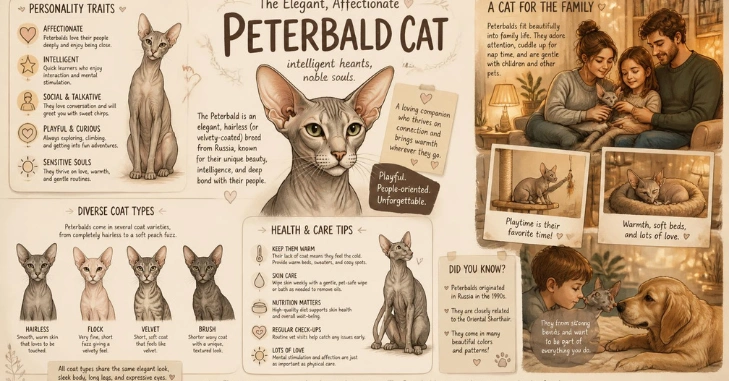
The coat is what surprises new owners most. A kitten’s early coat may not predict its final adult appearance. TICA notes that texture can change during the first two years, with hair sometimes being lost or gained.
The main coat descriptions include bald, flock or chamois, velour, brush, and straight. Bald cats have little visible hair, while flock coats can feel similar to suede. Brush coats have a wiry texture, while straight coats resemble ordinary feline fur.
This variation means two kittens from the same breed can look surprisingly different. It also changes the owner’s grooming routine, because exposed skin needs different care than a straight coat. Confirm coat type with the breeder, rescue, or veterinarian before creating a grooming schedule.
Temperament: social, smart, and involved
These cats are widely described as affectionate, curious, energetic, and strongly people-oriented. TICA says they often follow their favorite people and can be noticeably vocal around the home. They also tend to enjoy active games, including fetch and other interactive play.
That sociability can be a major advantage for families wanting an involved companion. It can also create problems in homes where everyone is away for long periods. Daily play, attention, climbing options, and puzzle-style activities can help meet their social and mental needs.
Grooming and skin care require a routine.
Hairless does not mean maintenance-free. Natural skin oils can collect without a full coat to absorb and distribute them. Purina recommends regular wiping, while TICA describes bathing as part of care for hairless individuals.
Bathing too often can dry exposed skin, so more washing is not always better. PetMD advises owners to ask a veterinarian about a suitable skin-care routine. Ears, nails, and teeth also need regular attention, as they do with other cats.
Temperature, sun, and indoor comfort
Less fur means less protection from temperature extremes and direct sunlight. PetMD notes that hairless breeds can be more vulnerable to sunburn, heat, and cold. A stable indoor environment gives owners better control over those risks.
Warm resting spots can improve comfort during colder months, especially in air-conditioned homes. Limit strong sun exposure; it can damage skin when it’s uncovered. Ask a veterinarian before applying any sunscreen or topical product to a cat’s skin.
Health, lifespan, and everyday nutrition
TICA lists a life expectancy of 12 to 15 years or longer. Individual longevity still depends on genetics, veterinary care, nutrition, activity, and living conditions. Regular checkups help owners catch dental, skin, weight, or age-related changes earlier.
Choose a complete and balanced food that matches the cat’s life stage and health needs. Body condition matters more than copying another owner’s portion size. A veterinarian can adjust calories when growth, activity, body weight, or medical needs change.
Living with this breed in a U.S. home
A temperature-controlled indoor home suits these cats better than unrestricted outdoor living. Their social nature also favors households with regular human contact and dependable playtime. Families can browse the Newspaj pets section for future animal-care coverage and related guides.
Children and other pets can be compatible with calm, supervised introductions. TICA describes the breed as generally social with children, cats, dogs, and visitors. New owners can also explore Newspaj lifestyle coverage for broader home and family topics.
Finding a kitten or rescue in the United States
This breed remains uncommon so that responsible sourcing may take time. TICA maintains a breeder directory for members who agree to its code of ethics. Prospective owners should still ask detailed questions about health records, socialization, contracts, and return policies.
Rescue is less common, but it is still worth checking shelters and breed-focused networks. Petfinder sometimes lists confirmed examples in the United States, although rescue breed labels can be uncertain. Meeting the individual cat matters more than relying on a label alone.
Purchase prices can vary by region, pedigree, age, coat, and breeder practices. One current breed guide quotes roughly $1,700 to $3,000, but that range is not a guaranteed U.S. market price. Compare health practices and breeder transparency before comparing price alone.
Who is this breed a good fit for?
This cat can suit people who want a close, interactive companion rather than an independent roommate. A good home provides daily attention, play, warmth, indoor safety, and consistent grooming. Owners should also be comfortable with vocal behavior and frequent requests for company.
The breed may be less suitable for households that stay empty for much of each day. It can also demand more skin and temperature management than a typical short-haired cat. Prospective owners should spend time with adults before deciding whether the personality feels right.
Next step for prospective owners
Start by meeting adult cats, not just kittens, and ask detailed care questions before committing. Discuss allergy concerns and skin care with qualified medical and veterinary professionals when applicable. For more general updates and guides, readers can return to the Newspaj home page.
Bring a written list of questions when speaking with a breeder, rescue, or veterinarian. Ask about coat care, social needs, health records, diet, and the cat’s daily routine. A careful match matters more than choosing this breed for appearance alone.
Frequently asked questions
Is a Peterbald hypoallergenic?
No hairless cat is guaranteed to be hypoallergenic. TICA explains that reactions can involve saliva, dander, or coat-related allergens, not hair alone. People with allergies should spend meaningful time around the individual cat before bringing one home.
Do these cats need baths?
Some hairless individuals need occasional bathing or regular wipe-downs to manage skin oil. The ideal schedule varies with coat type, skin condition, and the cat’s environment. Too-frequent bathing may dry the skin, so veterinary guidance is useful.
How long do they live?
TICA lists an expected lifespan of 12 to 15 years or longer. That figure is a breed estimate, not a promise for every cat. Preventive care, dental health, nutrition, exercise, genetics, and early treatment all affect individual longevity.
Are they good with children and other pets?
Breed organizations describe these cats as social and generally compatible with children and other animals. Individual temperament and early socialization still matter, especially in busy homes. Slow introductions and respectful handling give every pet a better chance to settle in well.