
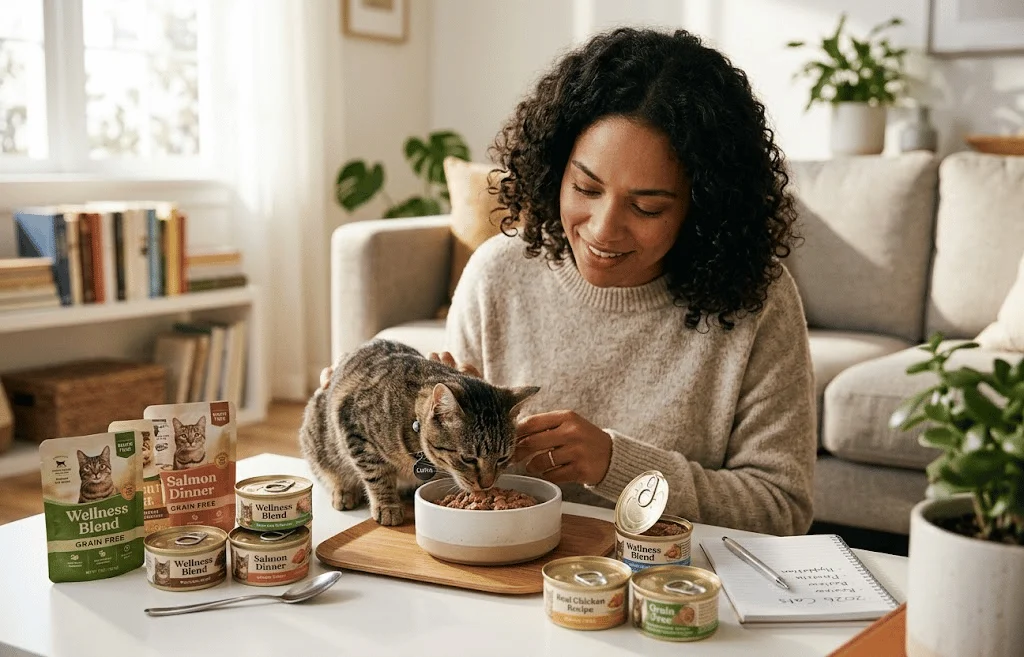
Choosing the best wet cat food is less about finding one universally perfect can and more about matching the food to your cat’s age, calorie needs, preferences, and health. A formula that works beautifully for a healthy adult may be a poor fit for a growing kitten, a senior cat, or an animal with digestive problems. For US shoppers, the most useful starting point is a food that is complete and balanced for the appropriate life stage, backed by a manufacturer with strong nutrition and quality-control practices.
Wet food also brings a practical hydration advantage because canned cat foods commonly contain roughly 70% to 80% water. That can make them especially appealing for cats that do not drink much on their own, although fresh drinking water should still be available every day. Wet food is not automatically superior to every dry food, so the goal is to choose a nutritionally appropriate diet your cat will reliably eat.
Short answer: For most healthy adult cats, Purina Pro Plan Complete Essentials Beef & Chicken Entrée in Gravy is the strongest all-around choice. It is complete and balanced for adult maintenance, comes from a research-heavy manufacturer, and provides 80% moisture. The right food still depends on your cat’s age, calorie needs, texture preference, and health status.
The Best Wet Cat Food at a Glance
| Pick | Best for | Life stage | Texture | Why it stands out |
|---|---|---|---|---|
| \\*Purina Pro Plan Complete Essentials Beef & Chicken Entrée in Gravy\\* | Best overall | Adult | Entrée in gravy | Complete adult nutrition, 80% moisture, research-focused brand |
| \\*Fancy Feast Classic Pâté Chicken Feast\\* | Best budget | All life stages | Pâté | Affordable, widely available, complete and balanced |
| \\*Royal Canin Adult Instinctive Thin Slices in Gravy\\* | Picky adult cats | Adult | Slices in gravy | Palatability-focused formulation and moderate calories |
| \\*Hill’s Science Diet Adult Sensitive Stomach & Skin Salmon & Vegetable Entrée\\* | Sensitive stomachs | Adult | Entrée | Feeding-trial supported and designed for digestibility |
| \\*Purina Pro Plan Development Chicken & Liver Entrée\\* | Kittens | Kitten/growth | Classic entrée | DHA plus nutrition designed for growth |
| \\*Royal Canin Aging 12+ Thin Slices in Gravy\\* | Senior cats 12+ | Adult maintenance | Slices in gravy | Formulated specifically for older cats |
| \\*Royal Canin Weight Care Thin Slices in Gravy\\* | Calorie-conscious adults | Adult | Slices in gravy | High moisture with a weight-management focus |
How We Chose These Wet Cat Foods
The first filter was nutritional adequacy, not marketing language. AAFCO explains that a pet food’s nutritional adequacy statement tells you whether the product is complete and balanced and which life stage it supports. Ingredients are useful information, but they should not replace checking whether the entire formula meets the cat’s nutritional requirements.
We also considered manufacturer expertise, feeding research, calories, texture, moisture, and the needs of different types of cats. Strong pet-food companies typically employ qualified nutrition professionals, perform feeding or formulation research, maintain quality controls, and clearly state which life stage a product is designed to support. Royal Canin, Hill’s Science Diet, and Purina Pro Plan are among the established brands known for substantial nutrition research and veterinary involvement.
This is an editorial comparison, not an independent laboratory or feeding trial conducted by Newspaj, and it follows the same product-by-product method as the site’s best powder blush guide. Product formulas can change, and individual cats can react differently even when a food looks excellent on paper. Check the current package before buying, particularly the nutritional adequacy statement, calories, feeding instructions, and any guidance from your veterinarian.
The 7 Best Wet Cat Foods for US Cats in 2026
1. Purina Pro Plan Complete Essentials Beef & Chicken Entrée in Gravy: Best Overall
Purina Pro Plan Complete Essentials Beef & Chicken Entrée in Gravy is a practical choice for a healthy adult cat because it combines complete adult nutrition with a high-moisture format from a research-focused manufacturer. Its guaranteed analysis lists at least 11% crude protein, at least 2% crude fat, and no more than 80% moisture, while a 3-ounce can contains about 75 calories. The formula is labeled to meet AAFCO nutritional levels for maintenance of adult cats, which makes its intended use straightforward rather than leaving owners to interpret ingredient marketing.
The gravy texture may also work well for cats that prefer softer pieces and extra moisture over a dense pâté. Purina Pro Plan is backed by extensive pet-nutrition expertise and research, giving it an advantage over products from companies that disclose little about formulation standards or quality control. Cats with diagnosed medical conditions may still need a different diet, so “best overall” here means best fit for a typical healthy adult rather than every cat.
2. Fancy Feast Classic Pâté Chicken Feast: Best Budget Wet Cat Food
Fancy Feast Classic Pâté Chicken Feast stands out when cost matters but you still want a complete canned food. The formula lists 10% minimum crude protein, 5% minimum crude fat, and 78% maximum moisture, and it meets AAFCO nutritional levels for all life stages. Its smooth pâté texture also gives budget-conscious owners an alternative to chunks or sliced foods in gravy.
Availability is another reason it makes sense as a budget pick in the United States. Fancy Feast is sold by major grocery, big-box, and online retailers, which can make repeat purchasing easier than with smaller specialty brands. Prices vary by retailer, package size, subscriptions, and promotions, so compare cost per ounce or per can rather than judging value by package price alone.
3. Royal Canin Adult Instinctive Thin Slices in Gravy: Best for Picky Adult Cats
Royal Canin Adult Instinctive Thin Slices in Gravy is worth considering when texture and palatability are major obstacles. Overall, Royal Canin designs the food around adult feline preferences, while the formula provides 10.5% minimum protein, 81.5% maximum moisture, and about 66 calories per 3-ounce can. It is complete and balanced for adult maintenance according to its nutritional adequacy statement.
No recipe can guarantee that a particularly selective cat will eat it, because individual preferences vary dramatically. The thin slices and gravy, however, provide a noticeably different eating experience from pâté, making it a sensible option when texture seems to be why a cat rejects other foods. Introduce the new food gradually whenever possible instead of assuming refusal on the first serving means the formula will never work.
4. Hill’s Science Diet Adult Sensitive Stomach & Skin Salmon & Vegetable Entrée: Best for Sensitive Stomachs
Hill’s Science Diet Adult Sensitive Stomach & Skin Salmon & Vegetable Entrée is designed for adult cats that need a more digestion-focused everyday option. Moreover,Hill’s describes the formula as highly digestible and includes prebiotic fiber, while its nutritional adequacy is supported by animal feeding tests using AAFCO procedures for adult maintenance. That feeding-trial support matters for shoppers who want evidence beyond ingredient-list impressions.
Do not use a “sensitive stomach” food to self-diagnose persistent vomiting, diarrhea, weight loss, poor appetite, or other recurring symptoms. Those signs can have causes that an ordinary over-the-counter recipe cannot address, and some medical conditions require veterinarian-directed therapeutic diets. Use this food as an everyday option for an otherwise healthy adult whose veterinarian has not identified a condition requiring more specific nutrition.
5. Purina Pro Plan Development Chicken & Liver Entrée: Best Wet Cat Food for Kittens
Growing kittens have different nutritional needs than mature cats, so the life-stage statement matters, especially when choosing kitten food. Purina Pro Plan Development Chicken & Liver Entrée is formulated for kittens up to one year old and includes DHA to support brain and vision development, along with antioxidants and a high-moisture wet-food format. The product contains approximately 99 calories per 3-ounce can, although owners should always confirm the current label. More from us: Robert Bigelow.
Purina also reports feeding-test substantiation for complete and balanced nutrition during kitten growth. That makes this a stronger choice than feeding a growing kitten adult-maintenance food, since the ingredient list looks meat-heavy. Kittens often need several small meals per day, so follow current feeding directions and adjust portions with your veterinarian as body condition and growth change.
6. Royal Canin Aging 12+ Thin Slices in Gravy: Best for Senior Cats 12+
Royal Canin Aging 12+ Thin Slices in Gravy is aimed specifically at cats older than 12, making it the most age-targeted choice in this group. The formula lists 9% minimum protein, 2.5% minimum fat, 82% maximum moisture, and about 71 calories per can. Its nutritional adequacy statement is for adult maintenance, which is important because “senior” is not a separate AAFCO nutritional life-stage category.
Older cats are not nutritionally identical simply because they have reached the same birthday. Kidney disease, dental problems, weight loss, arthritis, thyroid disease, and appetite changes can all alter what an individual senior needs, so age-specific packaging should not replace veterinary assessment. For a healthy older cat that enjoys gravy-based food, however, this formula offers a convenient senior-focused starting point.
7. Royal Canin Weight Care Thin Slices in Gravy: Best for Calorie-Conscious Adult Cats
Royal Canin Weight Care Thin Slices in Gravy is designed for adult cats prone to gaining excess weight and needing a portion-controlled wet-food option. Its guaranteed analysis includes 8.4% minimum protein, 1.41% minimum fat, 3% maximum fiber, and 84.4% maximum moisture; it also contains L-carnitine and meets AAFCO requirements for adult maintenance. The high moisture content can make measured meals feel more substantial than very calorie-dense foods, although serving size still determines total calorie intake.
This is not a substitute for a veterinary weight-loss program when a cat is already overweight or obese. Safe feline weight loss depends on the cat’s current body condition, target weight, health, and total daily calories, and cutting food too aggressively can be dangerous. Use the can’s calorie information as part of a measured feeding plan rather than relying on terms such as “weight care” alone.
What to Look for Before You Buy Wet Cat Food
Start With the Nutritional Adequacy Statement
Find the AAFCO nutritional adequacy statement before judging the artwork, flavor name, or ingredient list. “Complete and balanced” means the diet is intended to provide all required nutrients in appropriate amounts for the specified life stage, whereas products labeled for intermittent or supplemental feeding are not designed to serve as the sole diet. A kitten needs a growth or all-life-stages food, while a typical healthy adult can use a formula labeled for adult maintenance.
Check Calories and Can Size
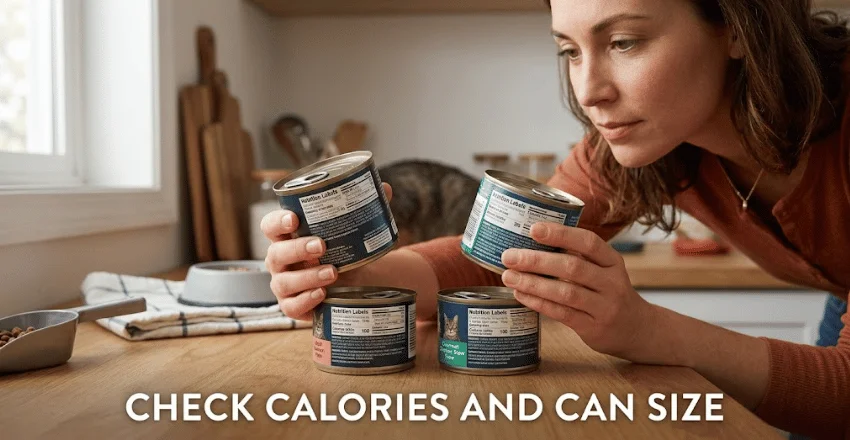
Two cans that look almost identical can provide meaningfully different calories, so do not set portions by can count alone. Start with the manufacturer’s feeding guide, then adjust according to your cat’s body condition, activity, treats, and any dry food included in the day. Consider total daily calorie intake rather than assuming every adult cat requires the same number of cans.
Consider Texture as Part of Nutrition
Pâté, minced food, chunks, morsels, and slices in gravy may have similar nutritional purposes but feel completely different to a cat. A nutritionally impressive food provides little practical value if your cat repeatedly refuses it, which is why texture and palatability belong in the buying decision. If you are changing textures as well as formulas, transition gradually and monitor appetite rather than making several changes at once.
Judge the Whole Formula, Not One Ingredient
Pet-food ingredient lists are arranged by weight as the product is formulated, but the first ingredient alone does not tell you whether the finished diet is nutritionally superior. Focus on the full nutrient profile, manufacturer expertise, feeding research, quality control, and suitability for your cat rather than using a single ingredient as a shortcut for quality. That approach also helps you avoid paying more for fashionable claims that don’t necessarily improve the food’s nutritional fit.
Medical Conditions Change the Answer
A healthy cat and a cat with kidney, urinary, gastrointestinal, metabolic, or food-responsive disease may need very different nutrition. Some conditions are managed with veterinary therapeutic diets that are formulated for a specific medical purpose, so an ordinary “sensitive,” “urinary,” or “weight” recipe is not automatically interchangeable with a prescription or veterinarian-directed diet. Ask your veterinarian before changing food when a cat has a diagnosed condition, unexplained weight change, recurring digestive symptoms, or ongoing urinary problems.
Wet Food vs. Dry Food: Which Is Better?
Wet food has a clear moisture advantage, with canned cat foods commonly containing about 70% to 80% water, but that doesn’t make dry food inherently inadequate. Cats can do well on complete and balanced dry food, wet food, or a carefully portioned combination of both, depending on health, preference, calories, and household routine. Many owners use wet food to increase dietary moisture while keeping some dry food for convenience, and fresh water should remain available regardless of feeding style.
Frequently Asked Questions
Is wet cat food healthier than dry cat food?
Not automatically, because nutritional completeness and suitability matter more than whether the food comes from a can or bag. Wet food does contain substantially more moisture, which can help increase a cat’s total water intake, while dry food can also provide complete and balanced nutrition when appropriately formulated. The healthier choice is the diet that meets your cat’s nutritional requirements, supports a healthy body condition, and works with any medical recommendations.
How much wet food should I feed my cat each day?
Start with the feeding directions and calorie information on the exact product rather than using a universal number of cans. Your cat’s body weight, body condition, age, activity, treats, and any dry food eaten during the day all change the appropriate portion. Recheck the amount if your cat consistently gains or loses weight, and ask your veterinarian for a calorie target when weight management is a concern.
Can I feed Fancy Feast every day?
You can use a Fancy Feast recipe as an everyday diet when its nutritional adequacy statement says it is complete and balanced for your cat’s life stage and the portions meet your cat’s calorie needs. The Chicken Feast Classic Pâté reviewed above is formulated as a complete and balanced food, but you should check other recipes individually because formulas and labels can differ. Cats with medical conditions may need a diet chosen with their veterinarian instead of a general over-the-counter formula.
Is pâté better than chunks or slices in gravy?
Neither texture is automatically more nutritious because the complete formula matters more than whether the food is smooth, sliced, or chunky. Pâté can appeal to cats that prefer a uniform texture, while gravy-based foods may be more attractive to cats that enjoy licking moisture and eating softer pieces. Compare the nutritional adequacy statement, calories, moisture, and your cat’s response rather than assuming one texture is universally superior.
Do cats need wet food every day?
Not every healthy cat must eat wet food daily if its overall diet is complete and balanced and it stays properly hydrated. Wet food can still help increase water intake, and many cats do well on a mix of wet and dry food. The best routine depends on the individual cat, so health status, body condition, preference, and veterinary advice should guide the final decision.
The Verdict
For a typical healthy adult cat, Purina Pro Plan Complete Essentials Beef & Chicken Entrée in Gravy offers the strongest overall balance of complete adult nutrition, high moisture, clear calorie information, and manufacturer research. Fancy Feast Classic Pâté Chicken Feast is the value pick, while the Royal Canin, Hill’s, and kitten-focused Purina formulas provide more targeted options when age, texture, digestion, or weight management changes the decision. Whichever food you choose, check the current nutritional adequacy statement and calorie information on the package because recipes, packaging, and feeding instructions can change.
Readers looking for ways to stretch a household budget may also find the back-market phones guide useful when comparing refurbished technology. For a different kind of health-focused read, the site also covers Liza Minnelli’s health journey and the wellness challenges discussed throughout her life.