
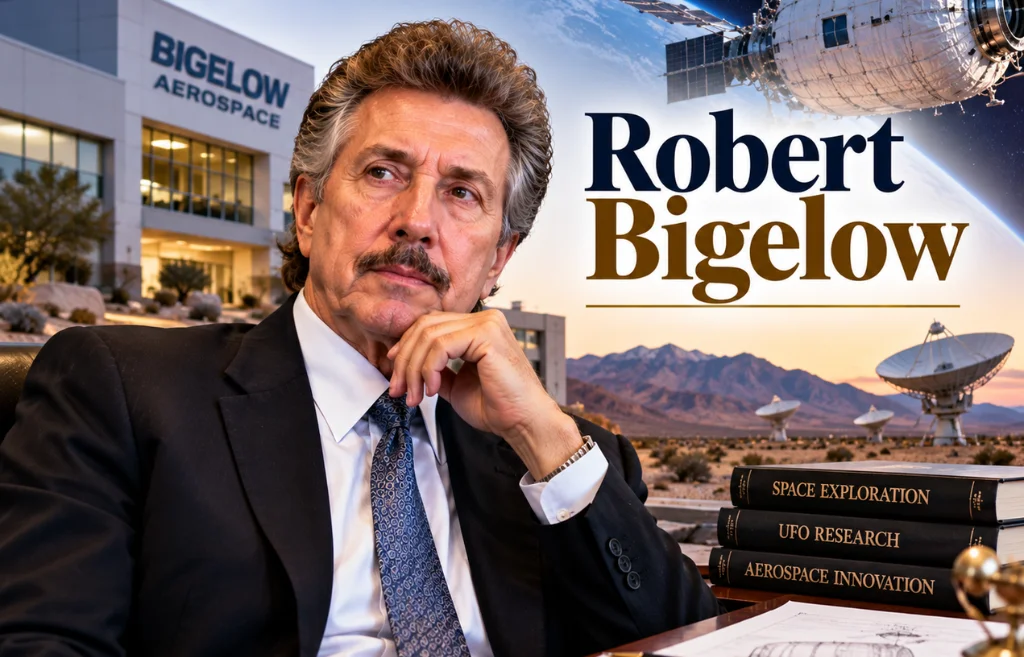
Robert Bigelow has spent decades moving money from ordinary real estate into extraordinary research. His career links extended-stay hotels, private spaceflight, NASA hardware, UFO investigations, and consciousness studies. For U.S. readers, his story matters because several projects intersected directly with American space and defense institutions.
Robert Bigelow is an American entrepreneur who built wealth through real estate and Budget Suites of America. He later financed Bigelow Aerospace, which developed expandable space habitats used in NASA testing. He also funded research into UFO reports, Skinwalker Ranch, and questions about consciousness after death.
| Key fact | Details |
|---|---|
| Born | May 12, 1944, in Las Vegas, Nevada |
| Age | 82 as of September 2026 |
| Education | Arizona State University graduate, 1967 |
| Primary business | Budget Suites of America and real estate |
| Aerospace venture | Founder of Bigelow Aerospace |
| NASA milestone | BEAM expandable habitat on the International Space Station |
| Research interests | UFO reports, anomalous phenomena, and consciousness studies |
TL;DR
- Bigelow built his fortune through real estate and Budget Suites of America.
- His aerospace company developed Genesis prototypes and the BEAM habitat, which NASA tested.
- He financed UFO and anomaly research, including work connected with Skinwalker Ranch.
- In 2026, BICS remains his clearest active public research project.
Who Is Robert Bigelow?
Bigelow was born in Las Vegas on May 12, 1944, and grew up during Nevada’s postwar expansion. He studied banking and real estate, then graduated from Arizona State University in 1967. Those subjects gave him a practical path to the capital he needed for bigger ambitions. His early goal was unusual for a young real estate student.
He wanted enough money to finance private space exploration without depending entirely on government programs. Real estate became the engine that made that possible.
How Real Estate Paid for Space Ambitions
Bigelow started with small rental properties and expanded into apartments, motels, and extended-stay lodging. In 1988, he founded Budget Suites of America, which became the core of his business fortune. Forbes reported in 2011 that his real estate holdings were worth about $700 million then. That business model also explains why his space plans focused on habitable structures. You might also like Best Wet Cat Food.
He understood property, construction, occupancy, and recurring rent long before he entered aerospace. Newspaj’s real estate section covers more property-focused business topics. His path also fits a broader pattern of entrepreneurs using one industry to finance another ambition. Newspaj’s profile of real estate investor Kris Krohn offers another property-business example. Bigelow’s case stands apart because he redirected substantial private capital toward orbital infrastructure.
Building Bigelow Aerospace and Expandable Habitats
Bigelow founded Bigelow Aerospace in the late 1990s to pursue commercial space habitats. The company developed technology connected to NASA’s earlier TransHab work. Its goal was to create expandable modules that offered more internal volume after launch. Genesis I launched in 2006, followed by Genesis II in 2007. These uncrewed prototypes demonstrated that expandable structures could operate in orbit. The company later pursued larger concepts, including the B330 habitat.
The NASA Connection: BEAM on the ISS
NASA awarded Bigelow Aerospace a $17.8 million contract in 2013 for the Bigelow Expandable Activity Module, or BEAM. The module launched aboard a SpaceX Dragon mission in April 2016. Astronauts expanded it on the International Space Station that May. BEAM gave NASA a way to test expandable habitat performance in a real orbital environment. Engineers monitored protection from debris, temperature extremes, and radiation.
The project remains the clearest example of Bigelow’s private investment reaching operational NASA hardware. Expandable habitats matter because launch vehicles have strict volume limits. A compressed module can launch smaller, then provide more room after deployment. Newspaj’s tech section covers more hardware and innovation stories.
Why UFOs and Skinwalker Ranch Are Part of His Story
Bigelow’s interest in unusual aerial reports predated his aerospace company. In 1995, he created the National Institute for Discovery Science, commonly called NIDS. The organization investigated UFO reports and other anomalous claims. In 1996, he bought the Utah property later widely known as Skinwalker Ranch. NIDS researchers monitored reports of strange lights, animal injuries, and other unusual events there.
History reports that the team produced no meaningful physical evidence confirming the ranch’s extraordinary claims. Bigelow later funded related aerospace studies through Bigelow Advanced Aerospace Space Studies. Public reporting connected that company with a Pentagon-funded program examining advanced aerospace threats and unidentified phenomena. Those government links pushed his private UFO interests into a wider national discussion.
From UFO Research to Consciousness Studies
His interests eventually shifted from anomalous aerial phenomena toward consciousness and life after death. In 2020, he founded the Bigelow Institute for Consciousness Studies, or BICS. The organization says it supports research on whether human consciousness survives bodily death.
BICS remains active online in 2026 and now sits under the RT Bigelow Educational Foundation. Its work shows his curiosity didn’t end with aerospace. Instead, his private funding moved toward questions that remain scientifically unresolved.
What Happened to Bigelow Aerospace?
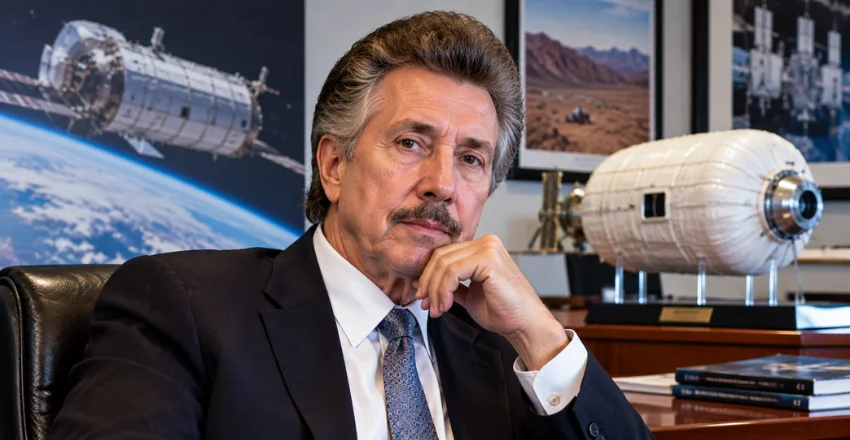
Bigelow Aerospace’s trajectory changed sharply in March 2020. Space.com reported that the company laid off its entire 88-person workforce during the COVID-19 pandemic. The company website remains online and still describes its past programs. By contrast, BICS continues publishing information about its mission and funding structure. That makes consciousness research the clearest active public project associated with Bigelow today. His aerospace legacy remains visible through Genesis and BEAM.
Why His Career Still Draws Attention
Bigelow’s career is unusual because one fortune supported several unrelated fields. Real estate cash funded aerospace engineering, unconventional research, and later consciousness studies. Few entrepreneurs have crossed those boundaries so directly. That mix also confuses people when they search his name. Some sources focus on hotels, while others emphasize UFOs or NASA partnerships.
The clearest picture separates verified engineering achievements from unproven paranormal claims. For broader entrepreneur and company coverage, visit Newspaj’s business section. It provides a natural next step after this profile. Readers can also compare how different founders build wealth before pursuing larger projects.
Final Takeaway
Bigelow’s story reads like three connected chapters: real estate, aerospace, and anomaly research. Each chapter shows how private capital can redirect an entrepreneur’s attention across very different fields. His legacy includes proven space hardware alongside research questions that remain unsettled.
For U.S. readers, the most important distinction is between documented projects and extraordinary claims. NASA partnerships and orbital hardware are well established, while paranormal interpretations remain contested. That distinction makes his career easier to understand without reducing its unusual scope.
Frequently Asked Questions
What is Robert Bigelow known for?
He is known for Budget Suites of America, Bigelow Aerospace, and privately funded research into unusual phenomena. His company built expandable space habitats that reached orbit and the International Space Station. He also funded UFO investigations and later consciousness research.
How old is Bigelow?
He was born on May 12, 1944. That makes him 82 as of September 2026. His business and research career now spans more than five decades.
Is Bigelow Aerospace still operating?
Space.com reports the company laid off its entire workforce in March 2020. Its website remains online and continues describing earlier programs. As of September 2026, the site shows no major public restart.
What is his net worth?
No recent audited public figure shows his personal fortune. Forbes estimated his real estate empire at about $700 million in 2011. Later profiles often call him a billionaire, but no filing confirms a precise 2026 net worth.
Did Bigelow own Skinwalker Ranch?
Yes, he bought the Utah property in 1996 and sold it in 2016. NIDS used the ranch to investigate reported anomalies for several years. Those reports remain disputed, and investigators found no conclusive physical evidence.