
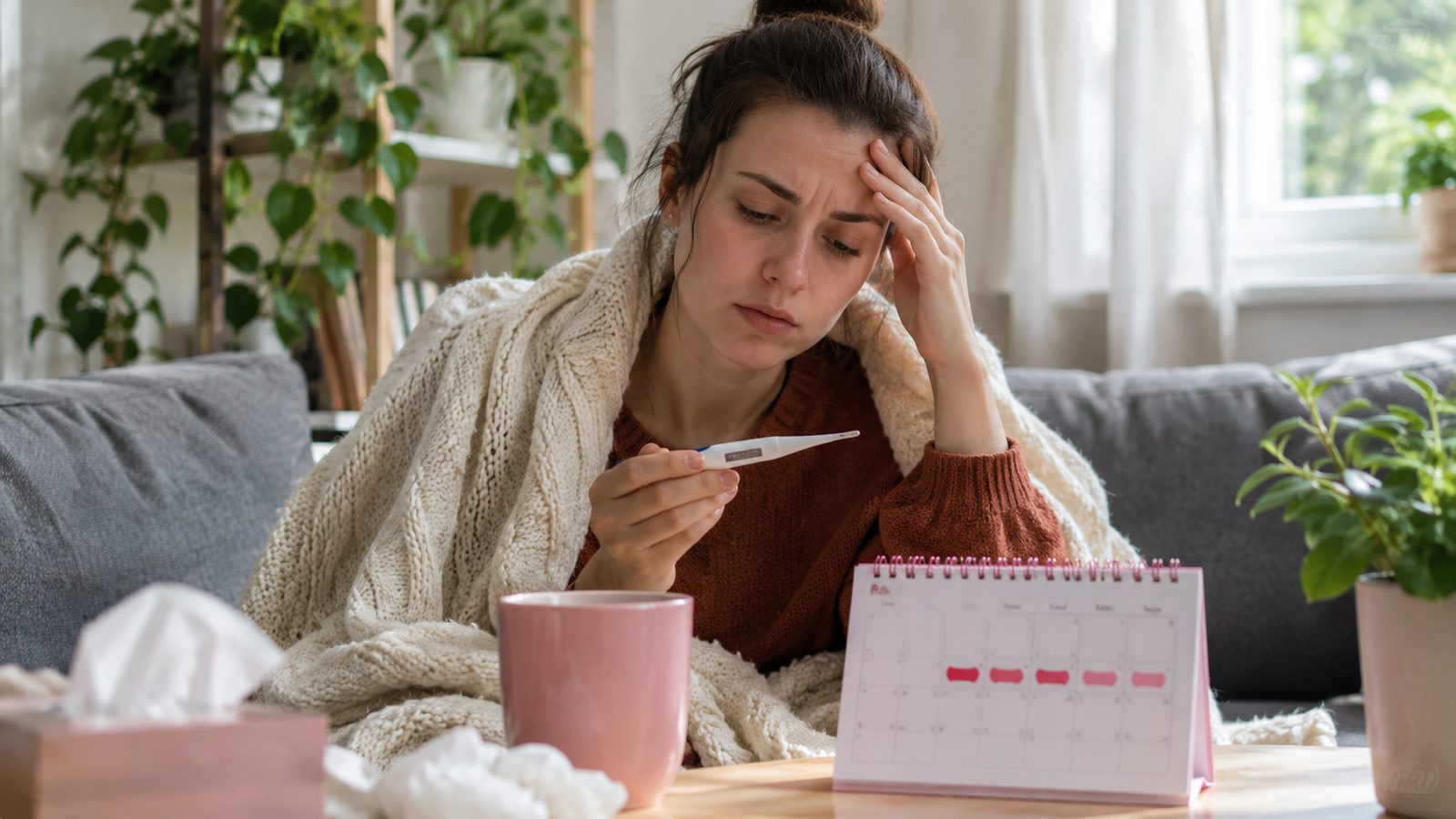
Yes, could being sick delay your period is a reasonable question after an unexpected cycle change. Illness can create physical stress that disrupts the hormone signals controlling ovulation. When ovulation happens later, your next period usually arrives later too. One late period does not prove that illness caused the change. Pregnancy, medications, hormonal conditions, weight changes, and stress can also affect menstrual timing. If pregnancy is possible, taking a pregnancy test is an important first step. Quick answer: Being sick can sometimes delay ovulation because illness places physical stress on the body. Later ovulation can then make your period arrive later than expected. Pregnancy should still be ruled out when possible, and persistent missed periods or concerning symptoms deserve medical evaluation.
Key Facts About Illness and a Late Period
| Question | What to know |
|---|---|
| Can illness delay a period? | Yes, physical stress from illness can affect ovulation and cycle timing. |
| Why does this happen? | Stress can interfere with hormone signals involving the brain, pituitary gland, and ovaries. |
| Does every cold cause a delay? | No. Cycle responses vary, and mild illness may cause no noticeable change. |
| Could pregnancy be responsible? | Yes. Pregnancy is a common cause of a missed period and should be considered first. |
| Can medications affect periods? | Yes. Some hormonal and nonhormonal medicines can affect ovulation or menstrual bleeding. |
| When should you see a clinician? | Seek evaluation after three months without periods, or sooner for concerning symptoms. |
| What symptoms need faster care? | Severe pain, very heavy bleeding, dizziness, or other significant changes need medical attention. |
Key Takeaways
- Illness can sometimes delay a period by delaying ovulation.
- Physical and emotional stress can affect menstrual hormone signaling.
- Pregnancy should be ruled out when a late period follows sexual activity.
- Some medicines and hormonal contraceptives can change menstrual patterns.
- Missing periods for three months warrants medical evaluation.
- Severe pain or heavy bleeding should not be dismissed as illness-related.
Could Being Sick Delay Your Period by Affecting Ovulation?
Your menstrual cycle depends on coordinated signals between your brain, pituitary gland, and ovaries. The hypothalamus helps regulate the hormones that eventually trigger ovulation. Significant physical stress can interfere with that signaling system. NICHD notes that extreme physical or psychological stress can disrupt normal hypothalamic or pituitary function. Certain illnesses can also contribute to hypothalamic amenorrhea in some people. These changes can delay or interrupt the hormonal events needed for ovulation. A period usually follows events that occurred earlier in the menstrual cycle. If ovulation happens later, the expected bleeding date can also move later. This explains why a period may shift after significant illness or physical stress.
Why Physical Stress Matters During an Illness
Being ill can affect more than one system at the same time. Fever, sleep disruption, appetite changes, and reduced activity can increase physical stress. A more serious illness can place greater demands on the body. Cleveland Clinic explains that stress can affect communication between the hypothalamus, pituitary gland, and ovaries. That disruption may contribute to delayed, lighter, or absent periods. Individual responses differ, so the exact delay cannot be predicted reliably. This does not mean every cold or stomach bug will change your cycle. Many people become sick without noticing any menstrual difference. The connection is more plausible when illness creates significant physical or emotional strain. For more everyday wellness reading, see the Newspaj health section.
How Late Can Your Period Be After Being Sick?
There is no reliable number of days that illness should delay a period. Menstrual timing naturally varies between individuals and sometimes between cycles. Your usual pattern matters more than a universal cutoff. For most adults, menstrual cycles commonly fall between 21 and 35 days, and NICHD notes that irregular cycles can be shorter or longer than that range. A single unusual cycle may not indicate a medical problem. Tracking the first day of each period can provide useful context. Record recent illness, major stress, medication changes, and unusual symptoms too. This information can help a clinician evaluate persistent cycle changes.
A Late Period Can Also Mean Pregnancy
Illness should never be used to rule out pregnancy. Pregnancy is the most common natural cause of secondary amenorrhea, according to NICHD. A missed period is also a common early pregnancy sign. Take a pregnancy test if your period is late and pregnancy is possible. ACOG also advises pregnancy testing when someone has had sex and misses a period. Testing provides more useful information than assuming illness caused the delay. Home pregnancy tests may be less accurate when taken too early. MedlinePlus notes that many tests become positive after the expected period is late. Follow the test instructions and contact a clinician if uncertainty continues.
Can Medications Make Your Period Late?
Some medications can change menstrual timing or stop periods. NICHD lists hormonal contraceptives among treatments that can cause amenorrhea. Certain antidepressants and blood pressure medicines may also affect hormones involved in ovulation. ACOG also notes that medications can contribute to absent periods. Hormonal birth control may stop menstrual bleeding while someone is using it. Other medical treatments can affect ovarian or hormonal function. Do not stop a prescribed medicine because your period changed. Instead, tell your clinician or pharmacist about the change. They can determine whether the medicine could be contributing.

Other Reasons a Period May Arrive Late
Illness is only one possible explanation for a changed menstrual cycle. Stress, thyroid problems, PCOS, major weight changes, and excessive exercise can also affect periods. Menopause and breastfeeding can cause expected changes during certain life stages. MedlinePlus also lists severe emotional distress, significant weight loss, and vigorous exercise among factors linked with absent periods. Some endocrine disorders and ovarian conditions can cause similar changes. Persistent irregularity deserves evaluation rather than repeated assumptions about stress. Your recent health history can provide useful clues. Consider whether anything changed around the time you expected to ovulate. A clinician may also ask about medications, exercise, diet, and previous cycle patterns.
What to Do When Your Period Is Late After Illness
Start by checking whether pregnancy is possible. Take a pregnancy test when appropriate, rather than relying on symptoms alone. Keep track of your cycle while you recover. Next, note any changes involving stress, sleep, eating, exercise, or medications. Avoid trying to force your period to start with unproven remedies. Rest and normal recovery are more appropriate after a routine illness. If your cycle returns to its usual pattern, no special treatment may be needed. Repeated missed periods deserve more attention. Medical evaluation can identify pregnancy, hormonal conditions, or other causes.
When Should You See a Clinician?
ACOG recommends evaluation when a person who previously menstruated has no period for three months without explanation. Three months without periods is considered secondary amenorrhea under ACOG guidance. MedlinePlus defines secondary amenorrhea as three or more months without a period. Earlier evaluation may be appropriate when other symptoms are present. Contact a healthcare professional sooner if you develop severe pelvic or abdominal pain. Very heavy bleeding also deserves medical attention. MedlinePlus advises medical review for major menstrual changes, severe pain, or very heavy bleeding. Heavy bleeding can sometimes cause dizziness or weakness. ACOG advises prompt evaluation when heavy bleeding accompanies dizziness, light-headedness, or a racing pulse. These symptoms should not be blamed on a delayed cycle.
What a Clinician May Check
A healthcare professional will usually begin by reviewing your menstrual history. They may ask about recent illnesses, medications, stress, eating patterns, and exercise habits. A pregnancy test may also be part of the evaluation. Further testing depends on your symptoms and medical history. Blood tests may assess thyroid function or reproductive hormones. Imaging may sometimes be used when another condition is suspected. The goal is to identify the cause rather than simply restart bleeding. Treatment depends on what is affecting the cycle. A single illness-related delay may require no treatment after recovery.
Frequently Asked Questions
Could being sick delay your period even if you are usually regular?
Yes, a significant illness can temporarily affect hormone signaling and delay ovulation. A later ovulation can then shift the next period. Pregnancy should still be considered whenever it is possible.
Can a cold or flu make your period late?
A routine mild illness may not change your menstrual cycle. A more stressful illness could affect cycle timing in some people. The effect depends on your individual hormonal response.
Can stress from being sick delay a period?
Yes, physical stress can influence the hormone system that regulates menstruation. Emotional stress during an illness may contribute as well. Cleveland Clinic identifies stress as a possible cause of delayed or absent periods.
Should I take a pregnancy test if I was recently sick?
Yes, if your period is late and pregnancy is possible. Illness cannot reliably distinguish a menstrual delay from early pregnancy. A pregnancy test is the appropriate way to begin ruling pregnancy out.
Can medication taken while sick delay a period?
Some medications can affect menstrual cycles, although effects vary by medicine. NICHD identifies several medication categories that can influence ovulation or menstruation. Ask a clinician or pharmacist about your specific prescription.
When is a missed period concerning?
Seek medical evaluation if periods are absent for three months without explanation. Contact a clinician sooner for severe pain, heavy bleeding, or other significant symptoms. Pregnancy concerns also deserve timely testing and medical guidance.
The Bottom Line
Being sick can sometimes push your period later by delaying ovulation. Physical stress can temporarily disrupt the hormone signals that regulate your cycle. That explanation is possible, but it should not automatically replace other causes. Take a pregnancy test when pregnancy is possible. Watch for recurring cycle changes after you recover. Contact a healthcare professional when periods remain absent or concerning symptoms develop. Missing periods for three months warrants clinical evaluation. Severe pain or heavy bleeding also deserves prompt medical attention. These steps help separate a temporary cycle change from a condition needing treatment.
More From Newspaj
- Browse more Newspaj health articles
- Browse more Newspaj fitness articles
- Return to the Newspaj home page
Sources
- American College of Obstetricians and Gynecologists (ACOG), Amenorrhea: Absence of Periods.
- Eunice Kennedy Shriver National Institute of Child Health and Human Development, What Causes Amenorrhea?
- MedlinePlus, Absent Menstrual Periods, Secondary and Menstruation.
- Cleveland Clinic, Can Stress Delay Your Period?.
This article provides general health information and does not replace medical advice from a qualified healthcare professional. —